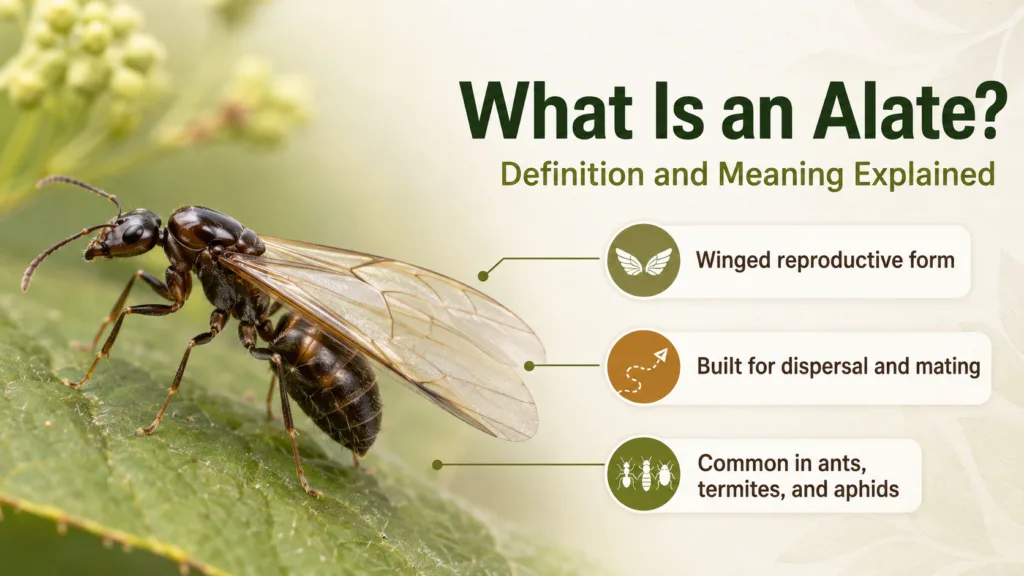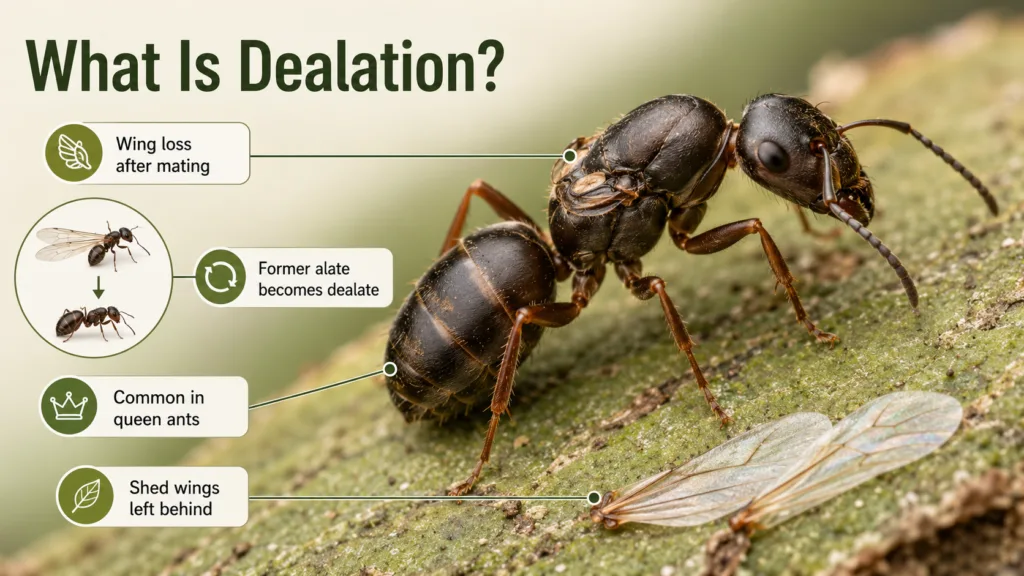
What Are Alates

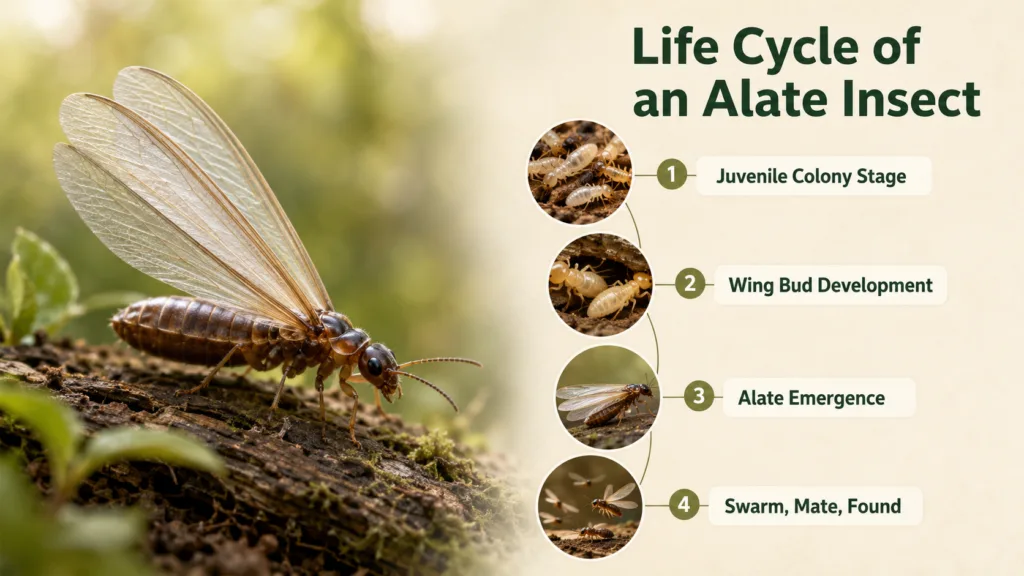
Alate reproductive caste plays a crucial role in colony reproduction and expansion in social insect colonies.

Alate Reproductive Caste: Role in the Colony

An alate reproductive caste is the winged reproductive form produced by a social insect colony. Its role is to leave the parent colony, mate, disperse, and, in successful cases, begin a new reproductive line through colony founding. In ants, alates are usually winged males and virgin queens; males die after mating, while mated females shed […]

Alate Reproductive Caste: Role in the Colony Read More »

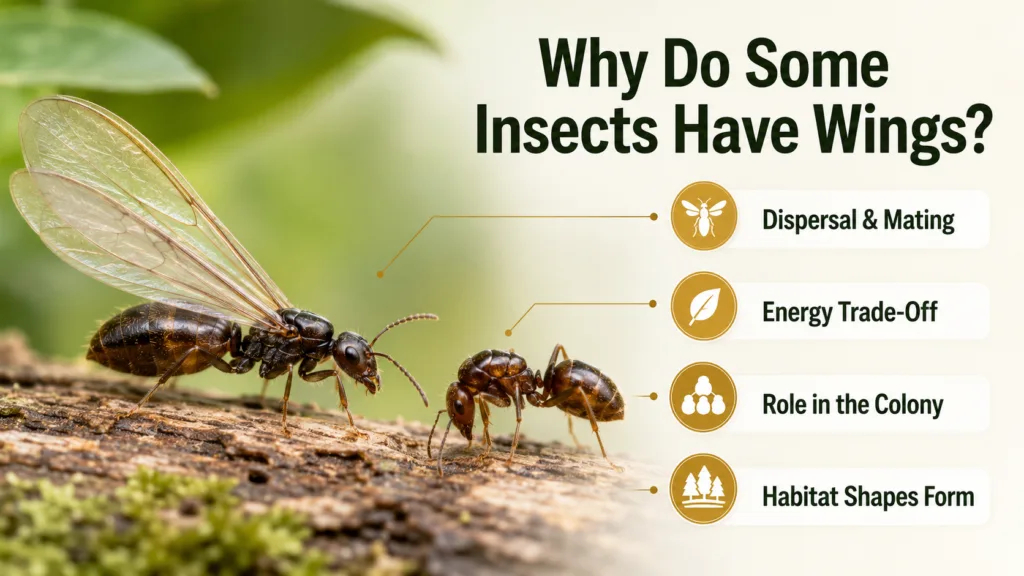
Why some insects have wings, showing flying ants and wingless ants side by side in a natural habitat.

Why Do Some Insects Have Wings and Others Don’t?

Some insects have wings because flight helps them disperse, find mates, escape local crowding, or start new colonies. Other insects lack wings because they belong to primitively wingless lineages, are immature stages, are worker castes, or come from winged ancestors that later lost wings when flight stopped being useful. Insect wings are mainly adult structures

Why Do Some Insects Have Wings and Others Don’t? Read More »

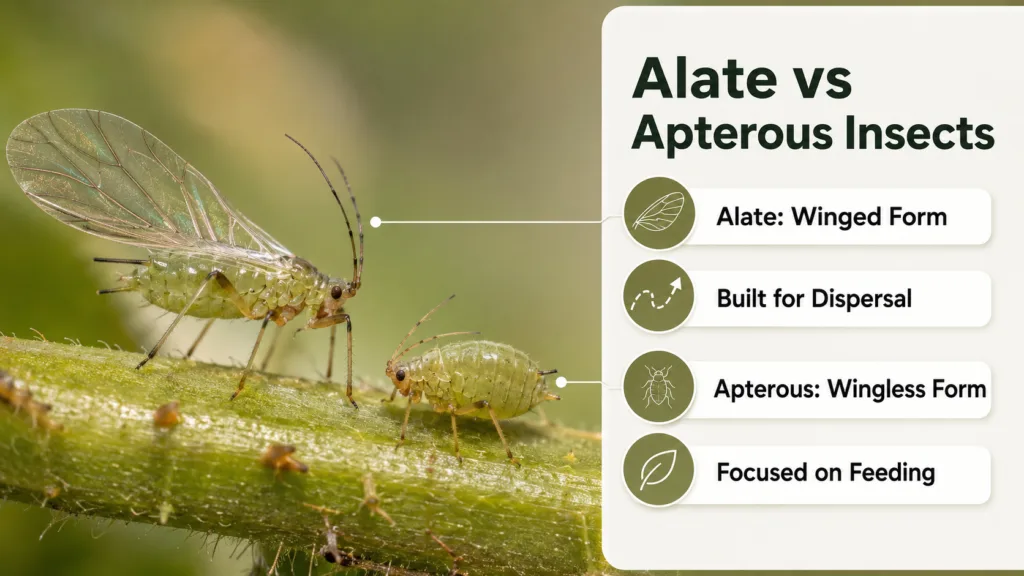
Alate versus apterous insects comparison showing key differences in wing presence and flight capability

Alate vs Apterous Insects: Key Differences

Alate insects are winged forms; apterous insects are wingless forms. The difference is most useful when comparing reproductive ants and termites, winged versus wingless aphids, or insects that are naturally wingless. In entomology, alate usually means an adult form with wings, often tied to dispersal or reproduction, while apterous means without wings, either because the

Alate vs Apterous Insects: Key Differences Read More »