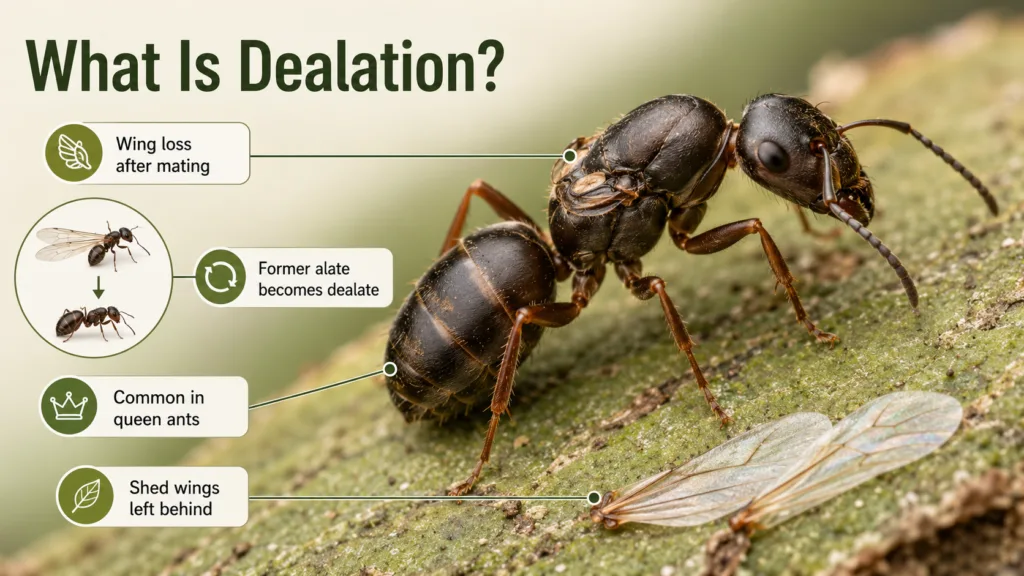
What Is Dealation? When Insects Lose Their Wings
Dealation is adult wing loss after a winged phase. See how ants and termites shed wings, what triggers it, and why it does not prove mating.
Explore the biology of alate insects, including reproductive castes, mating flights, wing development, dealation, colony founding and differences between winged and wingless forms.
Dealation is adult wing loss after a winged phase. See how ants and termites shed wings, what triggers it, and why it does not prove mating.
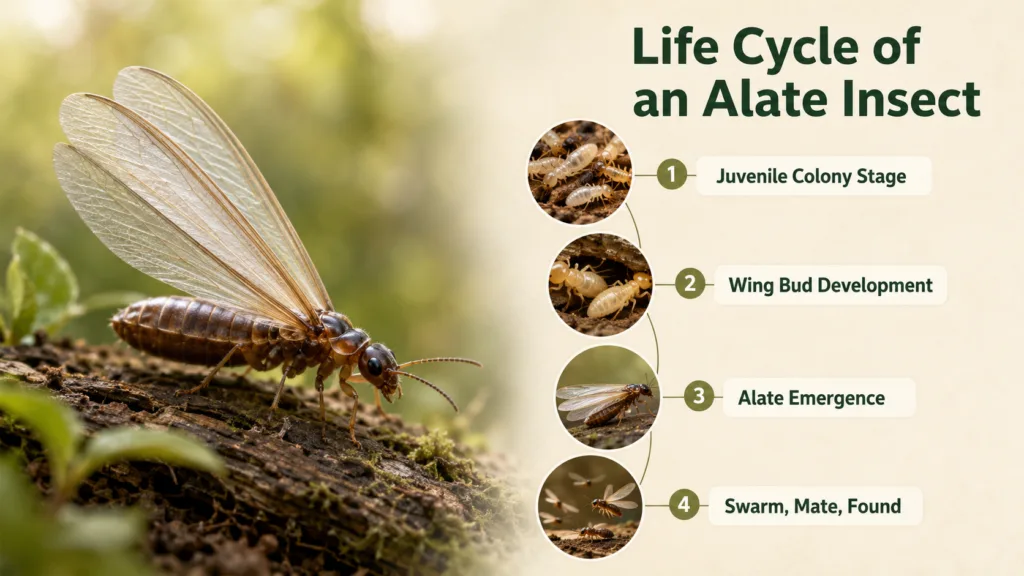
The alate phase fits differently into ant, termite, and aphid life cycles, linking development and dispersal with mating or colony founding.
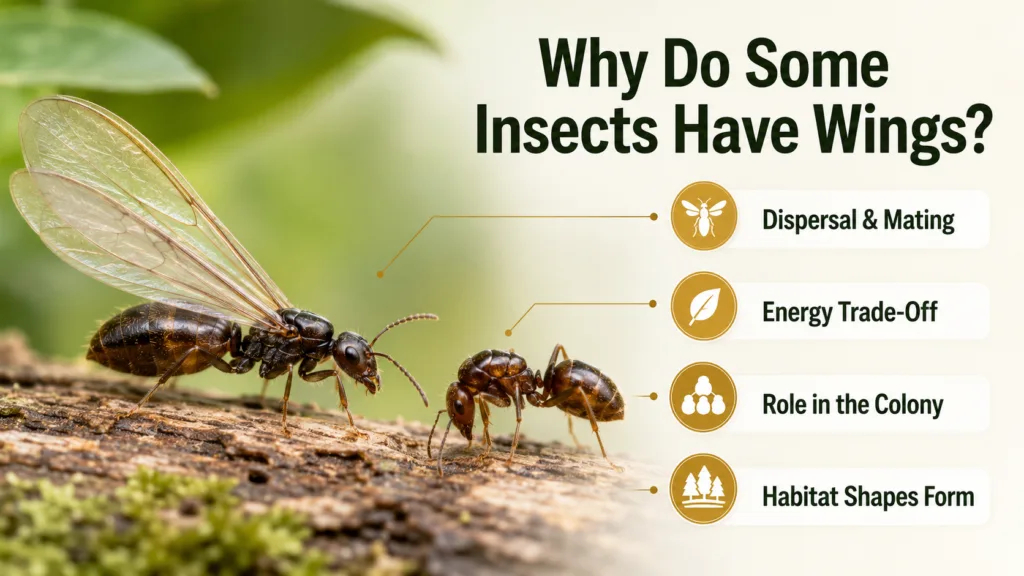
Insect wings can evolve, disappear, or occur only in certain sexes, castes, stages, or morphs when flight provides a biological advantage.
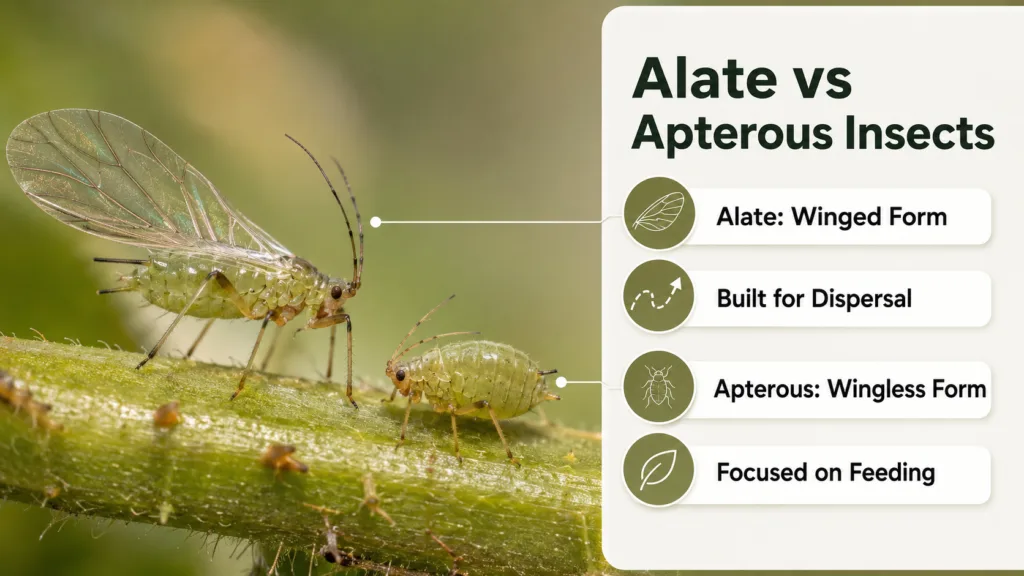
Compare alate and apterous insect forms by wings, development, dispersal, caste, and species context across aphids, ants, and termites.
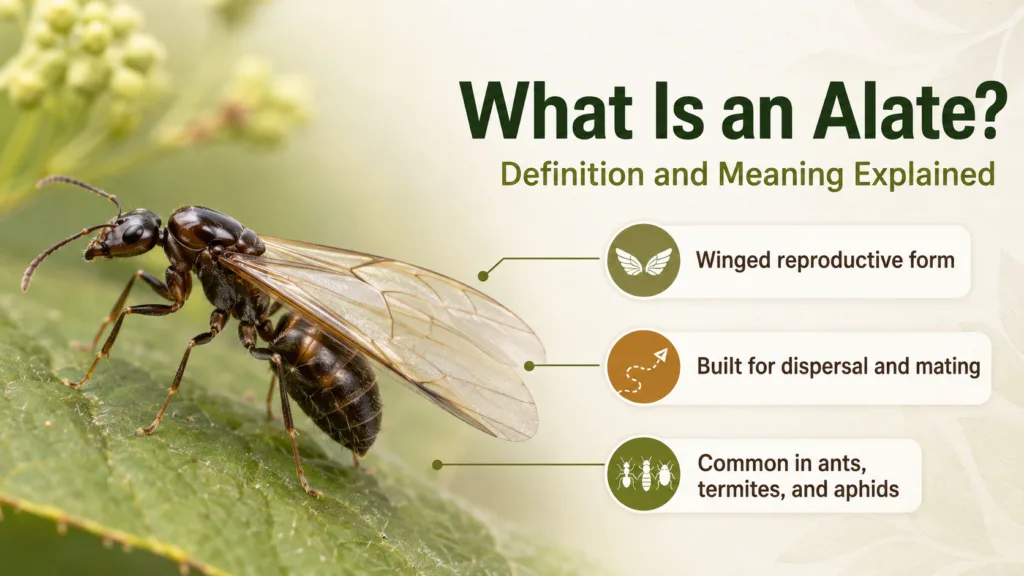
An alate is a winged form. In entomology, the term is used especially for the winged reproductives of ants and termites and for winged morphs of insects such as aphids. It does not name a species or taxonomic group. In botany, alate has the related meaning of having a wing or wing-like expansion.[a][b] The word