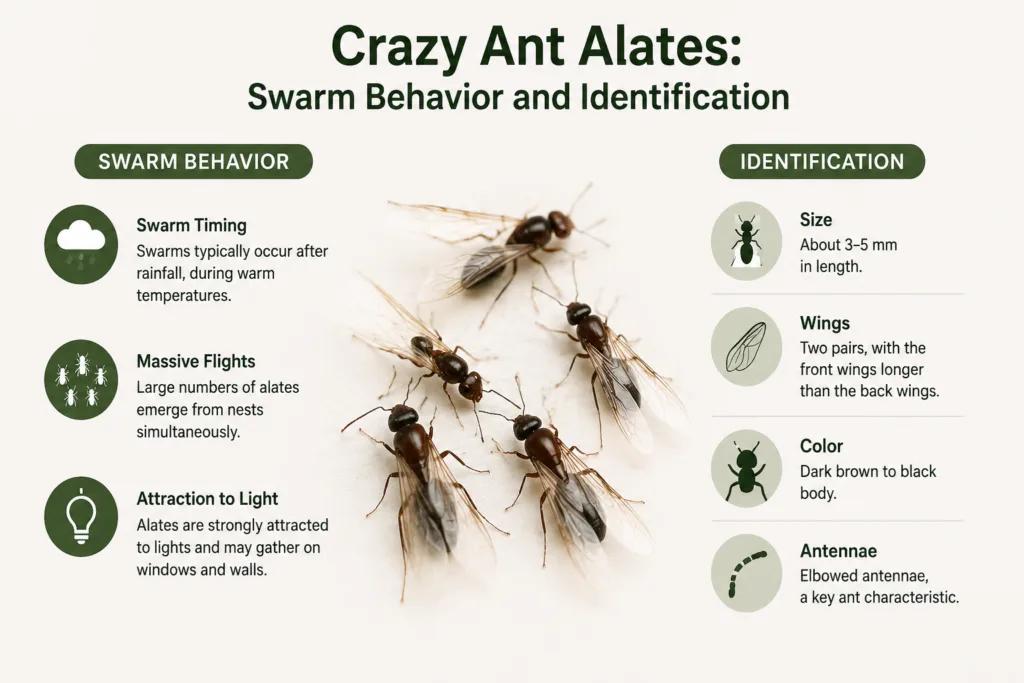
Crazy Ant Alates: Swarm Behavior and Identification
Crazy ant alates are reproductive forms, but swarm behavior varies by species. Caste, nest context, and colony spread aid interpretation.
Explore ant species and their winged reproductive forms, with identification traits, swarm behavior, nesting context, seasonal activity and species-specific risks.
Crazy ant alates are reproductive forms, but swarm behavior varies by species. Caste, nest context, and colony spread aid interpretation.
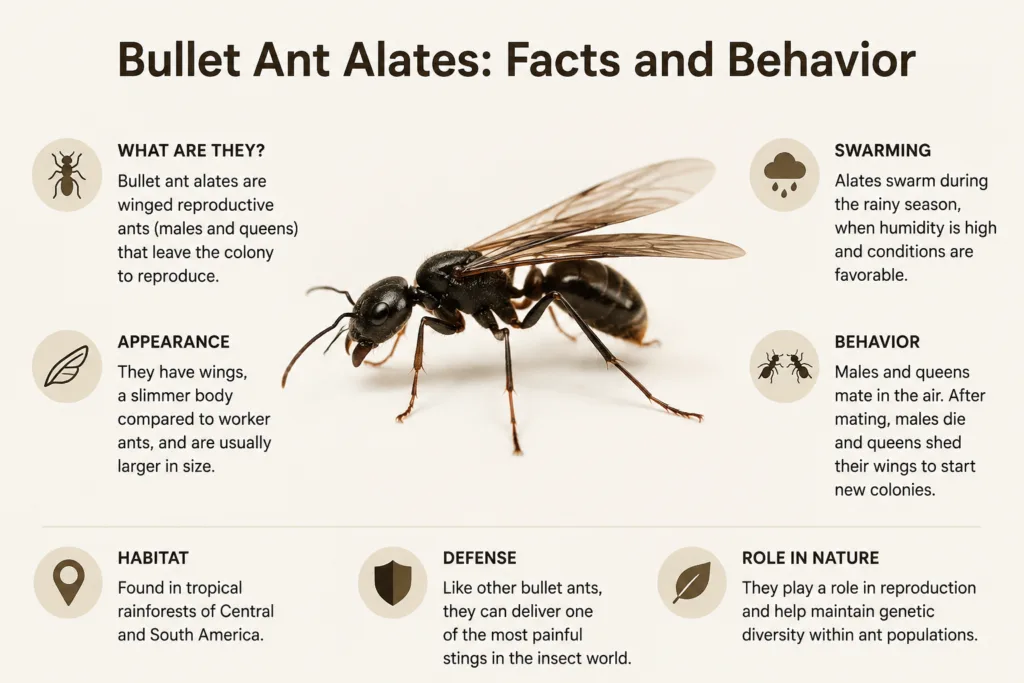
Bullet ant alates are winged reproductives of Paraponera clavata. Their sex, mating role, and colony-founding behavior differ from workers.
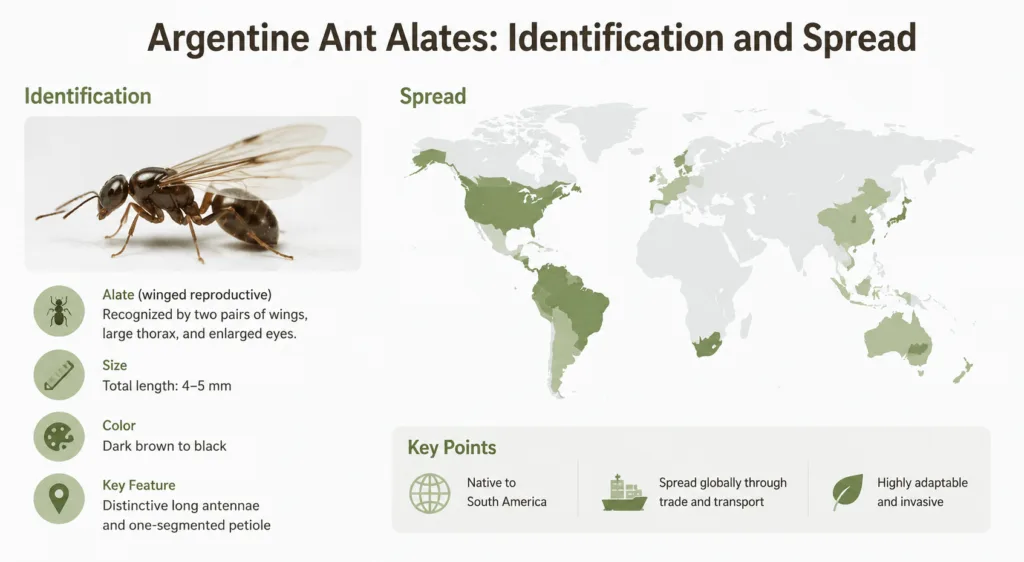
Argentine ant alates are reproductive forms of Linepithema humile, while colony spread often relies more on budding than long queen flights.
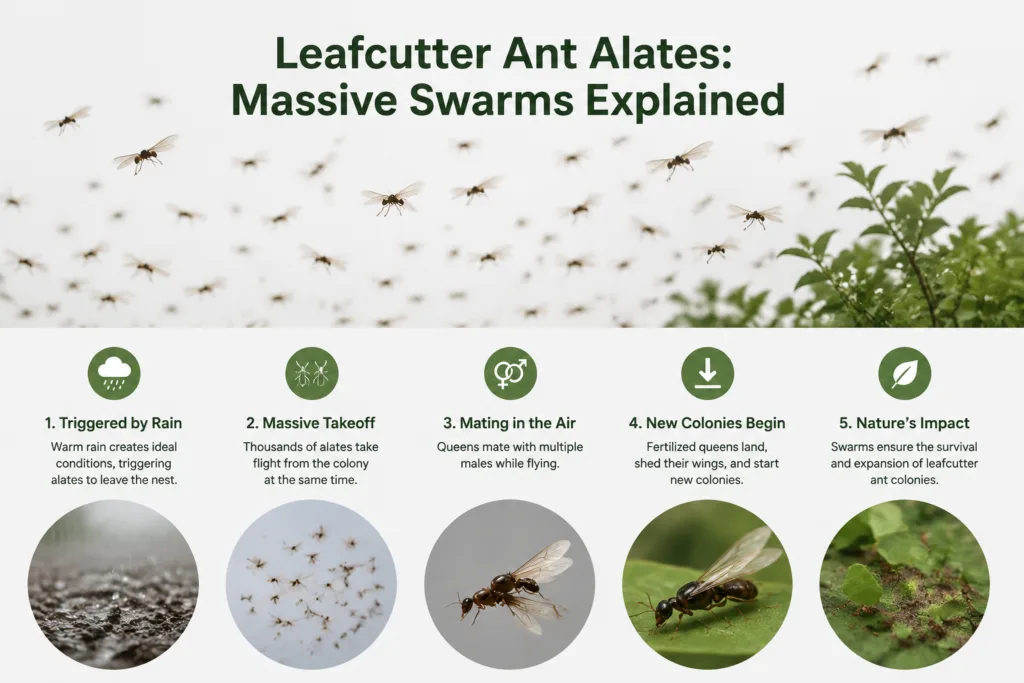
Leafcutter ant swarms are reproductive flights from mature colonies. Males, gynes, workers, weather, and nest activity shape the event.
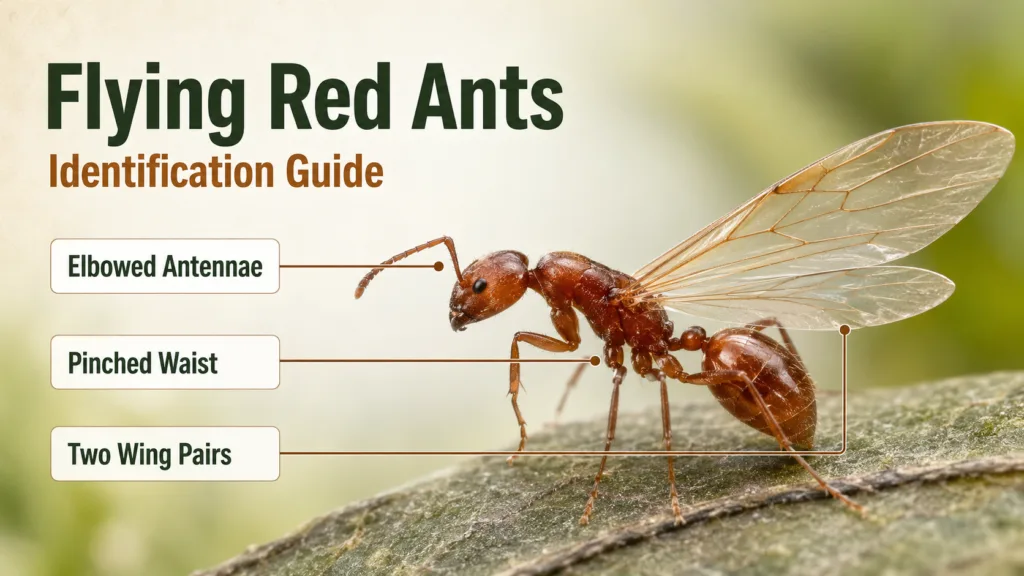
A flying red ant may be a fire, carpenter, field, harvester, or other ant. Body structure, color pattern, size, and nest context help narrow it down.
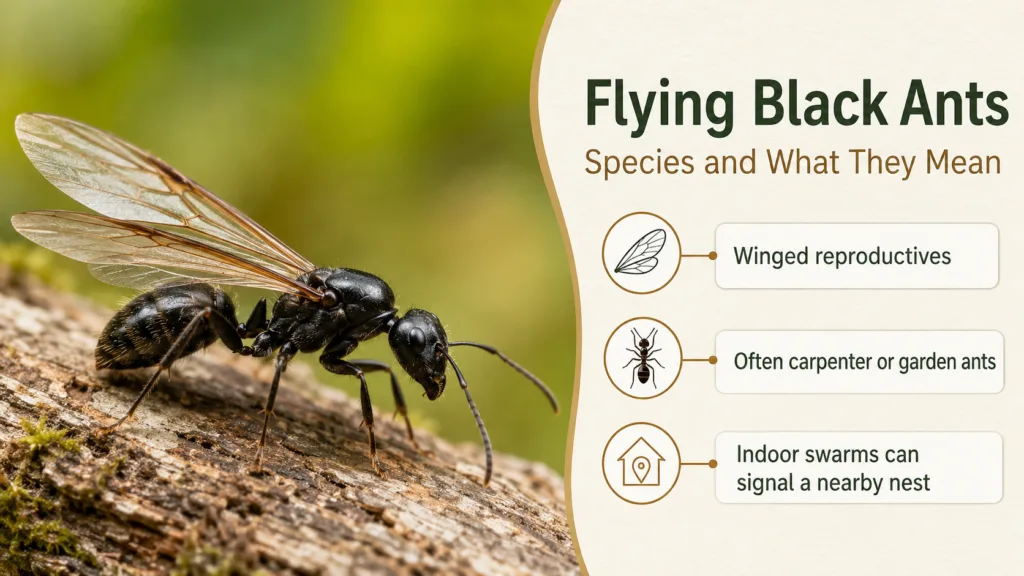
Black flying ants are reproductive forms from several species. Size, habitat, nest location, and indoor emergence help identify the source.
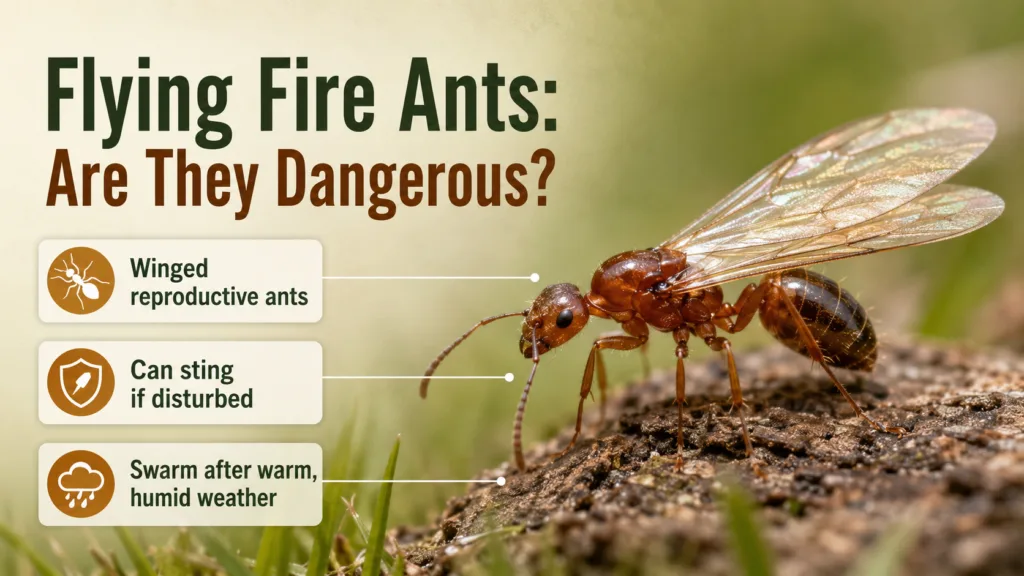
Flying fire ants are reproductive males and females; most sting risk comes from workers defending a mound. Sex and caste change the hazard.
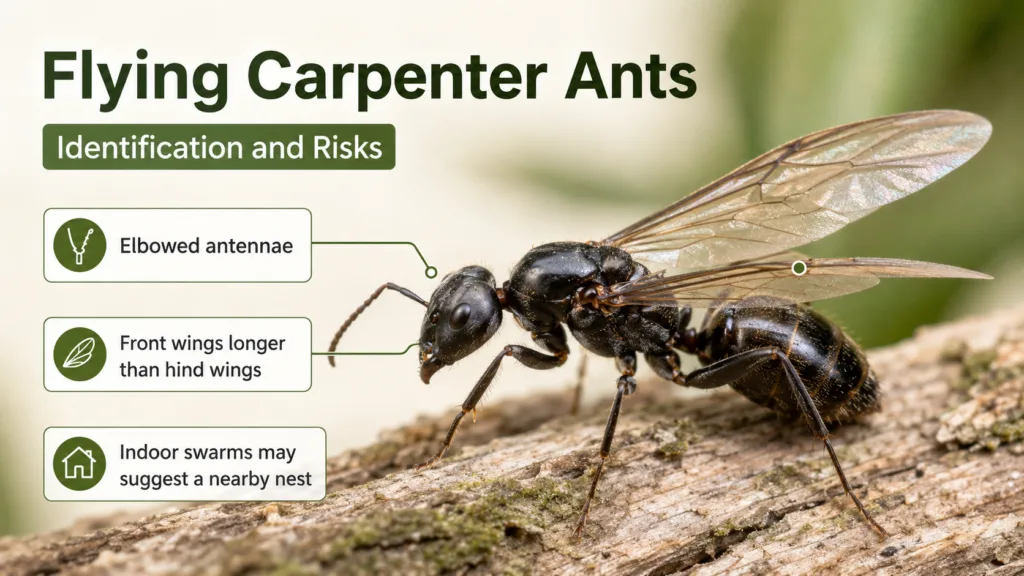
Identify flying carpenter ants by Camponotus body traits, size, petiole shape, and context, then assess whether they point to an indoor nest.