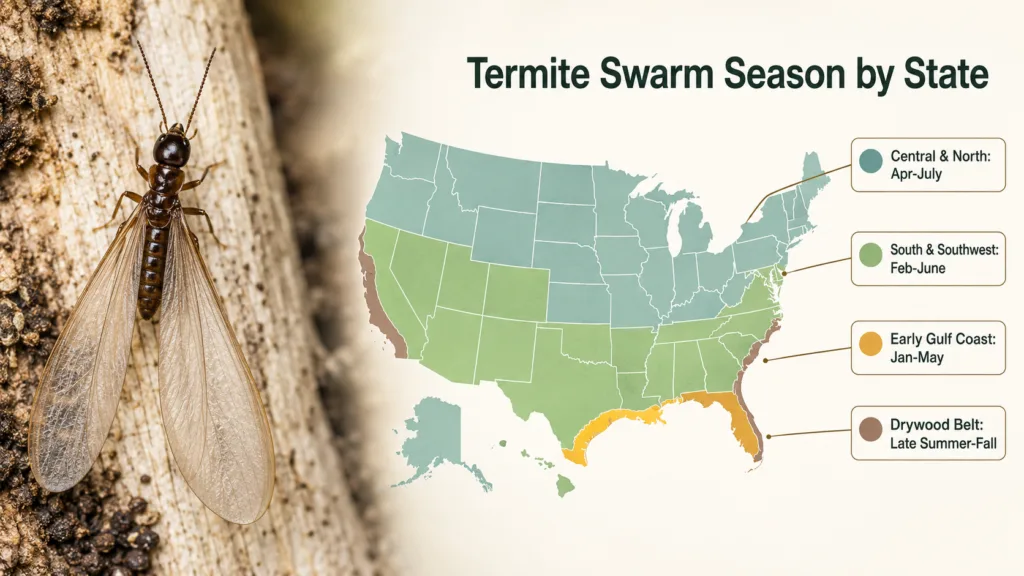
Termite Swarm Season by US State
State-level termite swarm windows vary across the US by termite group, climate, rainfall, and region, with later activity in some warm areas.
Explore termite swarmer guides covering identification, swarm timing, indoor evidence, discarded wings, regional activity, termite groups and post-swarm inspection clues.
State-level termite swarm windows vary across the US by termite group, climate, rainfall, and region, with later activity in some warm areas.
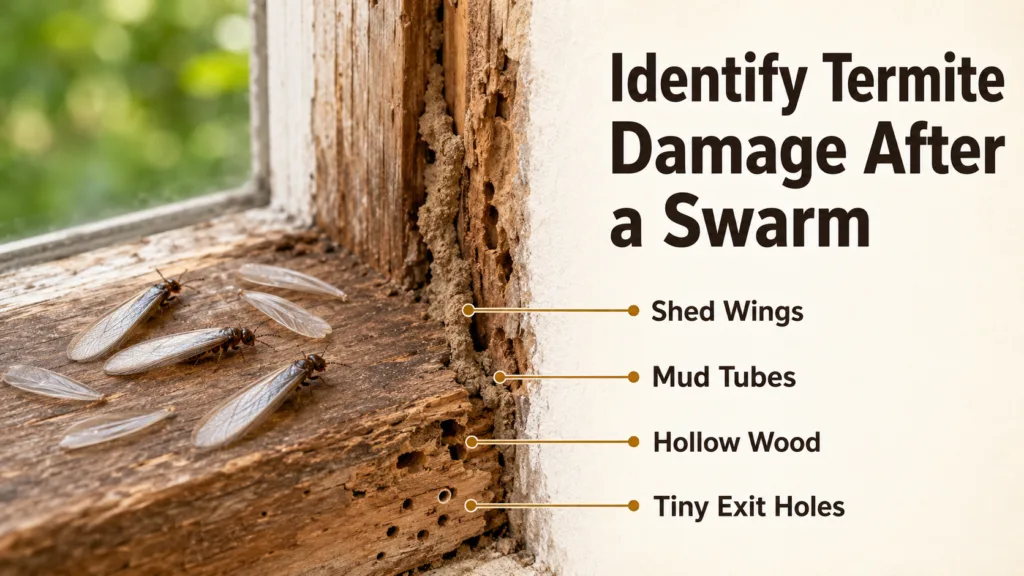
After a termite swarm, inspect emergence sites, wood damage, mud, pellets, and feeding signs rather than treating the swarm as damage.
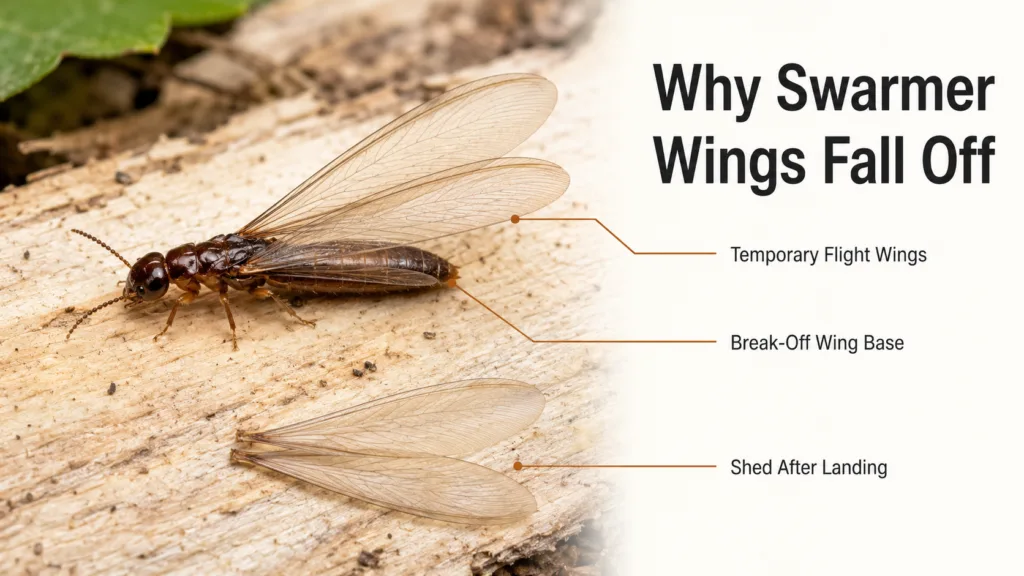
Termite alates shed temporary flight wings along basal sutures after dispersal. This dealation transition prepares them for life on the ground.
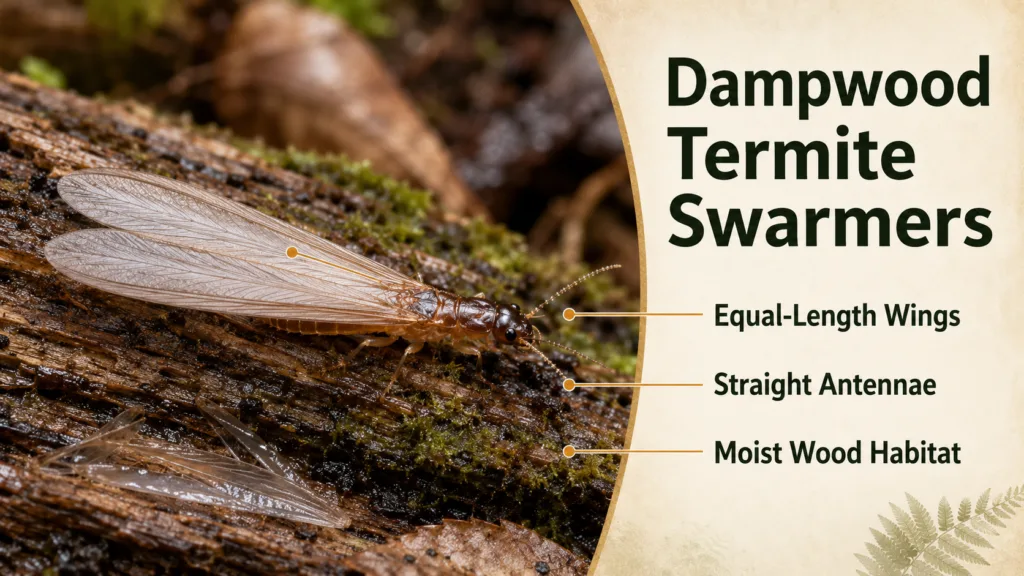
Dampwood termite swarmers are reproductive alates linked to damp or decayed wood. Moisture and emergence sites help interpret sightings.
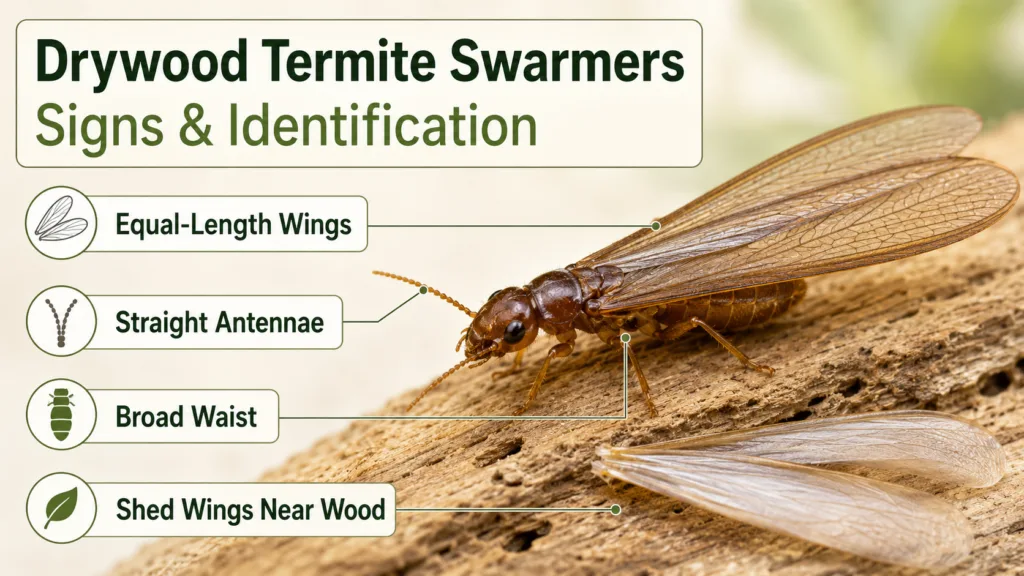
Drywood termite swarmers are identified by termite body traits plus pellets, kick-out holes, emergence location, and other evidence in the wood.
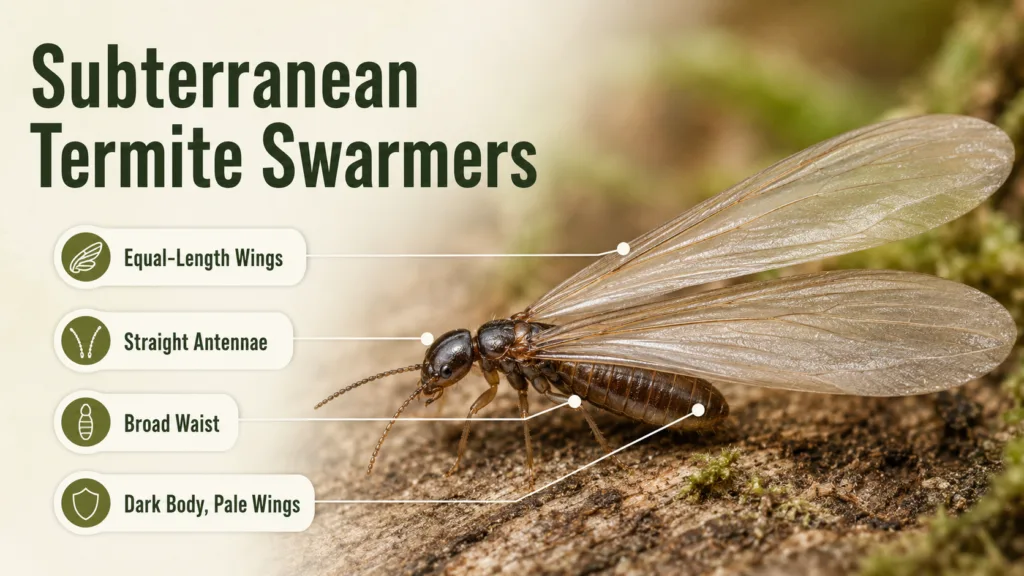
Subterranean termite swarmers share termite body traits; soil contact, shelter tubes, and emergence sites help distinguish this group.
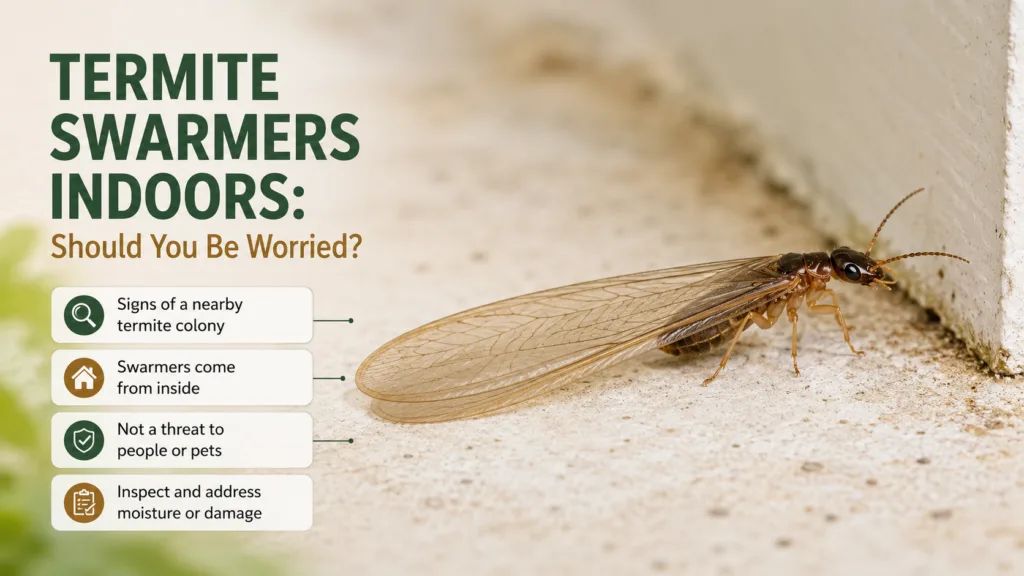
Indoor termite swarmers warrant investigation, especially if they emerge from walls or wood. Outdoor entry and shed wings need context.
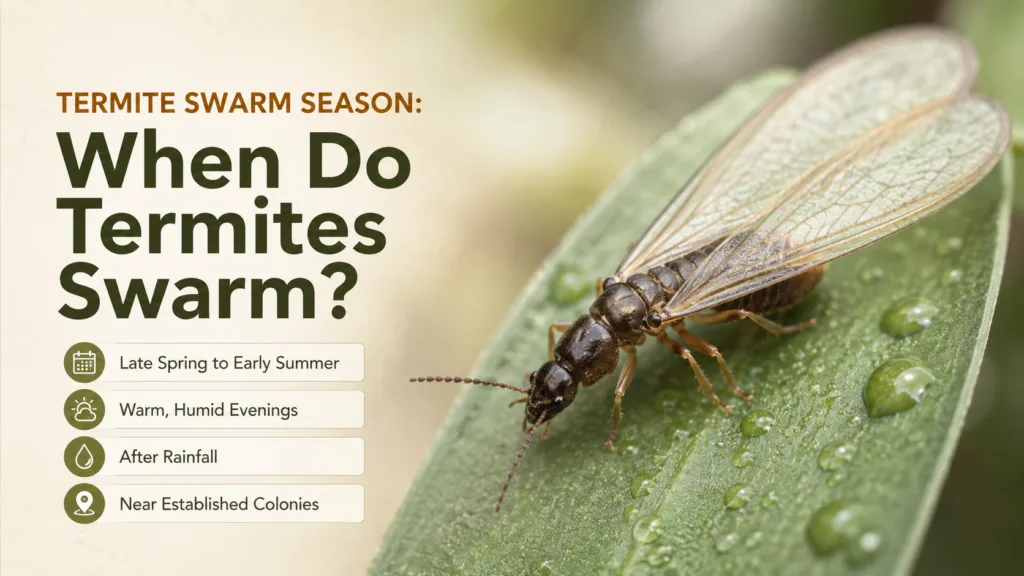
Termite swarming varies with species, region, rain, temperature, and time of day, so seasonal windows differ widely from place to place.
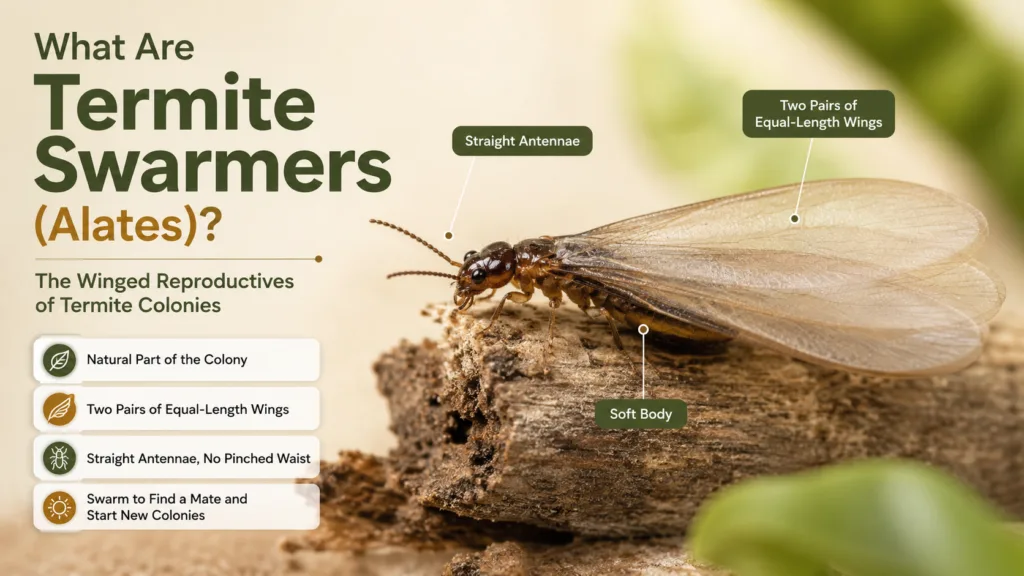
Termite swarmers are winged reproductives for dispersal and mating. Equal-sized wings, straight antennae, and a broad waist aid identification.